A Concern-Oriented and Ontology-Based Approach to Constructing Facets of Information Systems
This article represents the step where the direction developed together with Crenguța Bogdan reaches one of its most defining notions: the facet. If the previous works had introduced the concern-oriented method and the transition from concerns to domain ontology, here explicitly appears the mechanism through which, starting from the ontology and the mental descriptions of stakeholders' beliefs and knowledge, the facets of the future information system are constructed. The article is thus the link that connects concern-oriented analysis to the more mature idea of the information system as an aggregation of views composed of facets.
Bibliographic data
Authors:
Crenguța Bogdan, Luca Dan Șerbănați
Title:
A Concern-Oriented and Ontology-Based Approach to Constructing Facets of Information Systems
Published in:
ICSOFT 2007 – International Conference on Software and Data Technologies
Location: Barcelona, Spain
Year: 2007
Figures from the article
Thumbnails (click to enlarge)


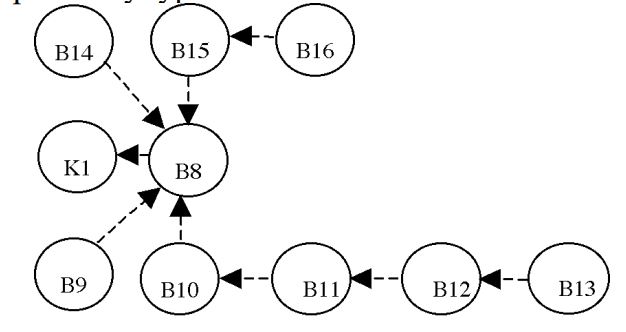
Fig. 1. Direct dependency relationships between beliefs related to C4.
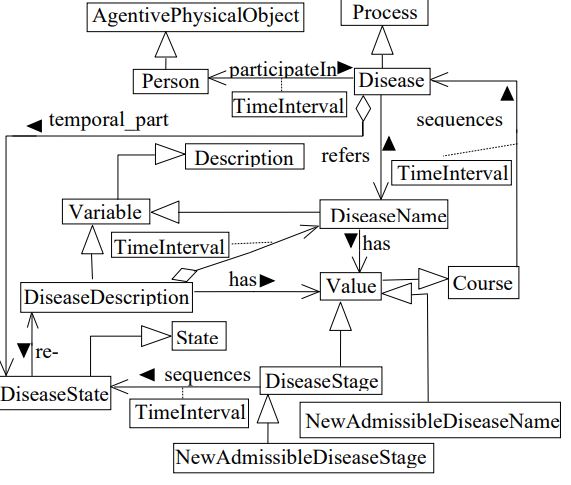
Fig. 2. The ontological model of K1.
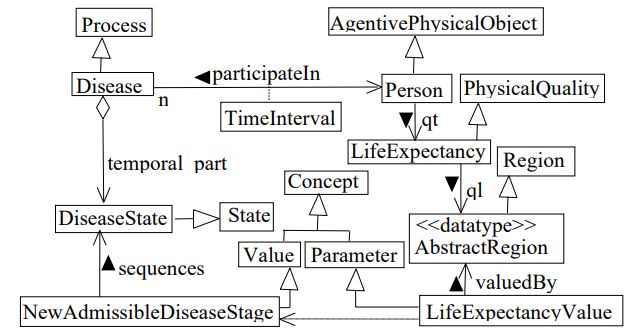
Fig. 3. The ontological model of B10.
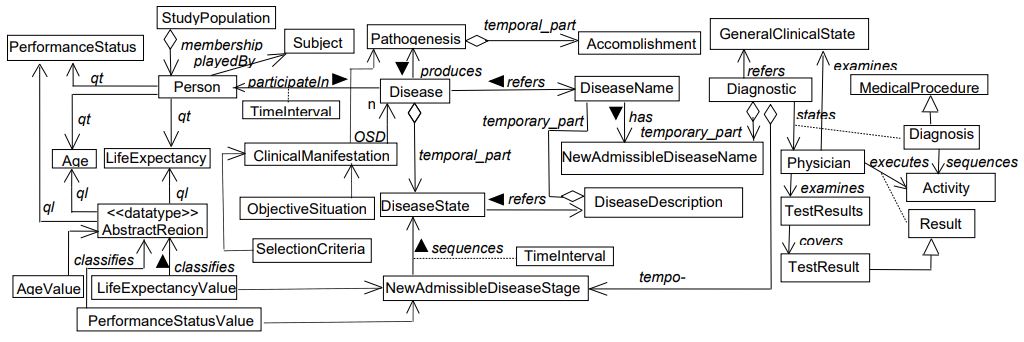
Fig. 4. The facet structure of concern C4.
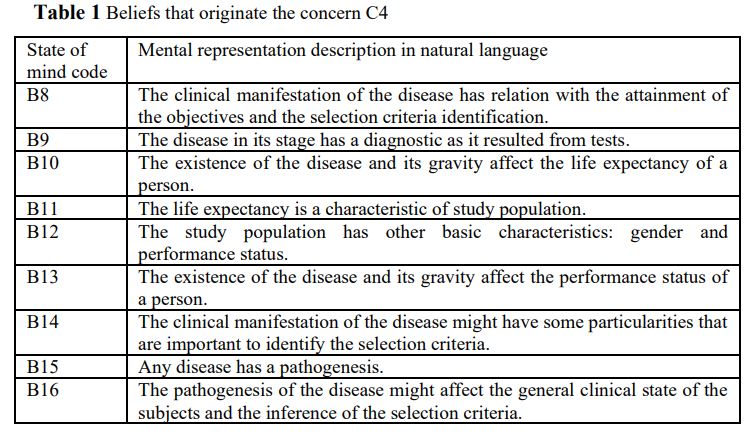
Tab. 1. Beliefs originating in concern C4.
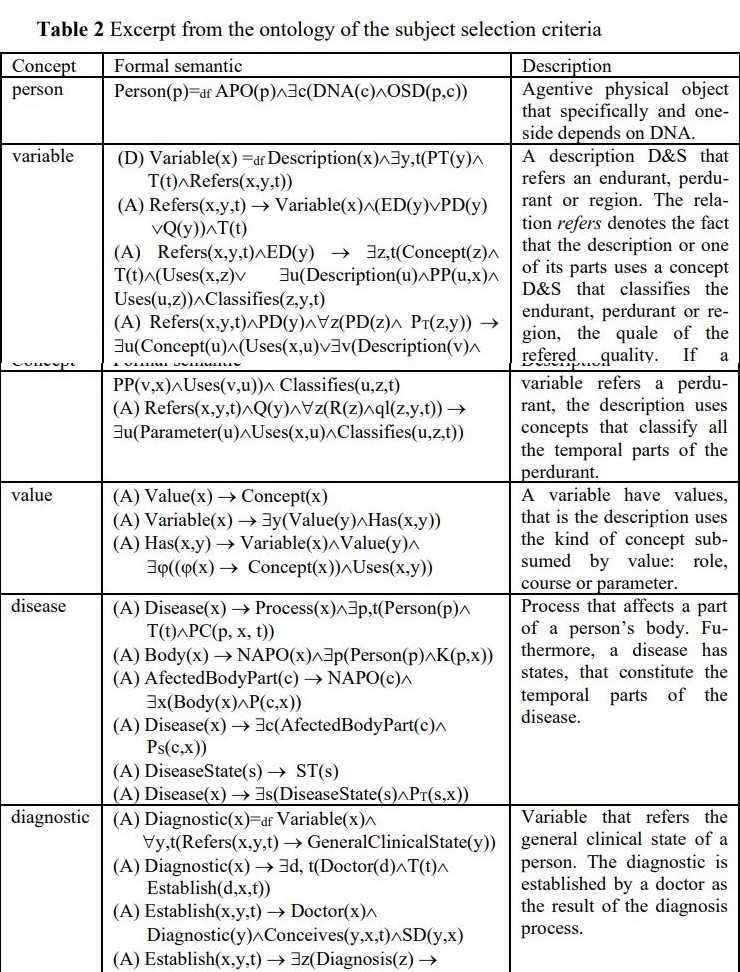
Tab. 2. Excerpt from the subject selection criteria ontology.
Conceptual contribution
The article shifts the focus from the construction of the domain ontology to the construction of facets and to the idea that an information system can be understood as an aggregation of views composed of facets associated with concerns.
- explicitly defines view and facet within the concern-oriented method;
- shows how the ontological UML models of beliefs and knowledge are constructed;
- describes the abstraction mechanism through which a usable facet in the future IS is obtained from the ontology;
- introduces the analysis of the degree of independence between facets, from identity to orthogonality;
- directly prepares the more mature idea of multi-facetted views in subsequent works.
Description
This article starts from the same general problem that runs through the whole Crenguța series: the complexity of information systems and the need for a methodical partitioning of their conceptual model. But here, the step forward is very clear. If the previous articles dealt mainly with the identification of concerns and the construction of the domain ontology, now the question becomes: how can one get from this ontology to partial, intelligible, and useful structures for designing the system?
The proposed answer is the notion of a facet. In the article, a facet is an abstraction determined by a concern and by the paradigm of the stakeholder who manifests it. It is not just an arbitrary "fragment" of the model, but a selection and an organization of concepts and relationships from the domain ontology, so as to semantically express the reasoning associated with a concern. For this reason, a facet is more than a technical submodel: it is a semantically motivated view.
The article also introduces the notion of an informational view, understood as a structural model of the system, like a UML class diagram, which contains the domain categories, the relationships between them, and the interpretation constraints. Such a view is not built directly, in a single move, but is viewed as a cluster of facets. In other words, the information system is no longer described by a single dominant decomposition, but by composing several abstractions motivated by different concerns.
The basis for this construction remains the domain ontology. The article reiterates the idea that the vocabulary and semantics of the system come from the mental descriptions of stakeholders' beliefs and knowledge, that is, from what the authors call semantic rationales. These are analyzed in relation to the problems associated with the concerns and provide both the domain concepts and the intentional relationships between them.
An important moment of the method is the construction of ontological UML models. These attempt to preserve the semantics of the ontology, but to express it in a form closer to current modeling tools. The article shows that both knowledge and beliefs can be transposed into such models. In its figures, there are concrete examples for a piece of knowledge and for a belief, which makes the step between ontology and modeling very visible.
From here the actual mechanism of abstraction comes into play. To build a facet, not all classes and all relationships from the ontological UML models are kept, but only those that will be part of the future information system and of the relevant semantics of the analyzed concern. Classes that belong only to the foundational ontology or that have no direct correspondent in the future system can be eliminated, provided that relationships essential to the meaning of the facet are not lost.
One of the most interesting ideas of the article is that facets can be in different degrees of independence from one another. They can be identical, partially overlapping, or orthogonal. If they are identical, it means that, fundamentally, two concerns are just one, manifested by different stakeholders. If they partially overlap, it means they share concepts or common fragments of knowledge. This analysis of independence between facets directly opens the way to the composition of views.
The case study used is again from the field of clinical trials, more precisely the process of identifying the subject selection criteria for a protocol. It is important to note that here clinical trials work mainly as a testing ground for the general method, not as an end subject in themselves. For this reason, although the article will also have to be linked to the medical informatics branch dedicated to clinical trials, it remains primarily a text on theory and method of modeling.
In conclusion, the article has a clear stake: to show that, starting from concerns and ontology, the conceptual model of an information system can be built step by step as an aggregation of views composed of facets. This is one of the texts in which Crenguța's direction acquires its most recognizable own identity.
The article's place in the research path
In the succession of Crenguța Bogdan's works, this article occupies the place where the theme of facets appears autonomously for the first time. It comes after the article on the concern-oriented method and after the text on the ontology obtained from concerns and makes the step from ontology to the partial structures through which the system can effectively be modeled.
For this reason, I see it as a very important work. It directly prepares the broader and more mature version of multifaceted information systems and, later, the synthesis text from 2010. If the first articles define the method and clarify the semantics of concerns, this one shows how to arrive at the internal architecture of the model.
In relation to my own preoccupations, the article is again very close to an older theme: how can complexity be divided without destroying it, how can the "tyranny of dominant decomposition" be avoided, and how can multiple, but coherent, views on the same design object be obtained.
This article belongs to my research direction regarding conceptual modeling and ontologies , developed together with Crenguța Bogdan around concerns, domain ontologies, views, and facets of information systems.
Links
- Back to Crenguța Bogdan's page
- Toward a Concern-Oriented Analysis Method for Enterprise Information Systems (2006)
- Understanding Concerns with Ontologies (2008)
- Towards an Ontology using a Concern-Oriented Approach for Information Systems Analysis (2007)
- Concern-Oriented and Ontology-Based Analysis of Information Systems (2010)