VASS (Value Added Services System) was conceived as a value-added services platform for domestic users, capable of mediating access to electronic services through different channels: human operator, automated voice response, the Internet, smart appliances, WAP terminals, and telephones equipped with SIM Toolkit.
The project was important to me because it marked the transition from specialised software applications to a system architecture oriented towards service integration, process modelling, and the organisation of interactions among users, operators, and service providers.
Period: 1999–2000
Domain: value-added services, service integration, multichannel platforms
Institutional setting: COMITEX S.r.l.
System type: distributed client–server system oriented towards services and integration
Personal role: analysis, requirements definition, system architecture, process and scenario modelling
Thumbnails from the project documentation (click to enlarge)

I was primarily interested in VASS as a software-architecture project: a system general enough to integrate several types of services and several forms of access for the final user.
The preserved documents show that the project was handled methodically: requirements definition, actor description, business-process modelling, interaction scenarios, and use cases, complemented by an explicit hardware/software architecture.
The declared objective of VASS was to provide domestic customers with access to value-added services by using technologies already familiar to a broad category of users. The documentation explicitly expressed the aim of bringing into users’ homes services that would otherwise have required lost time, effort, and an uneven quality of interaction.
The system was positioned in a market niche considered relatively unoccupied but promising, with possible applications in banking services, telematic Lotto, INPS, postal services, messaging, and the provision of information content.
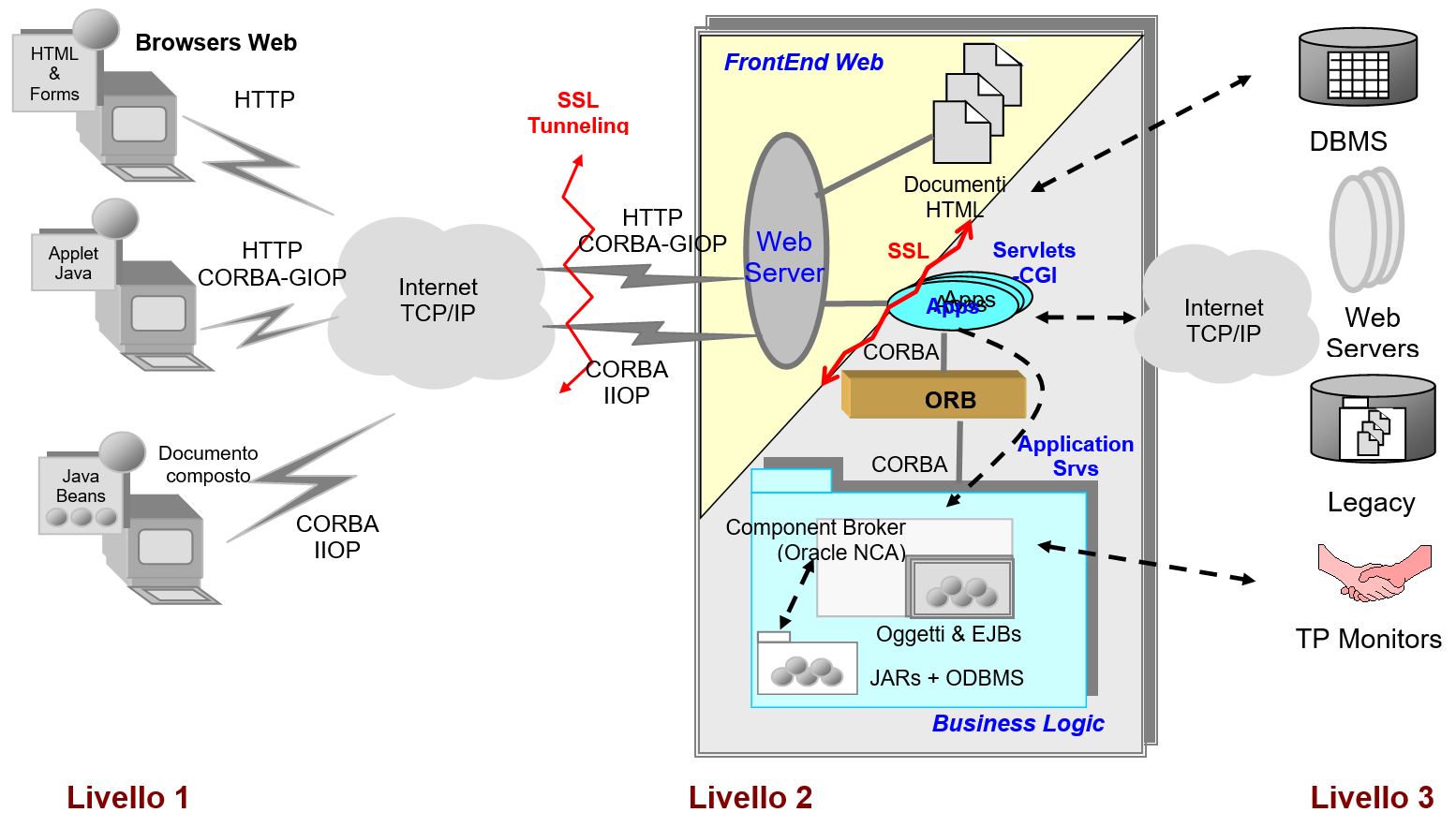
At the centre of the system was a service centre that centralised requests from users and responses from service providers. The architecture was designed to support multichannel access and to hide, behind normalised interfaces, the heterogeneity of providers and protocols.
The project documents indicate that VASS had to support requests through several modes of interaction: with an operator, without an operator through automated voice response, through the Internet, smart devices, WAP, and telephones equipped with SIM Toolkit.
The proposed architecture combined web servers, application components, databases, integration mechanisms, and standard communication protocols, following the logic of an open and extensible system.
One of the strengths of the VASS documentation is the richness of its scenarios. The system was described not only as an architecture, but also as a sequence of interactions among users, banks, operators, and other external entities.
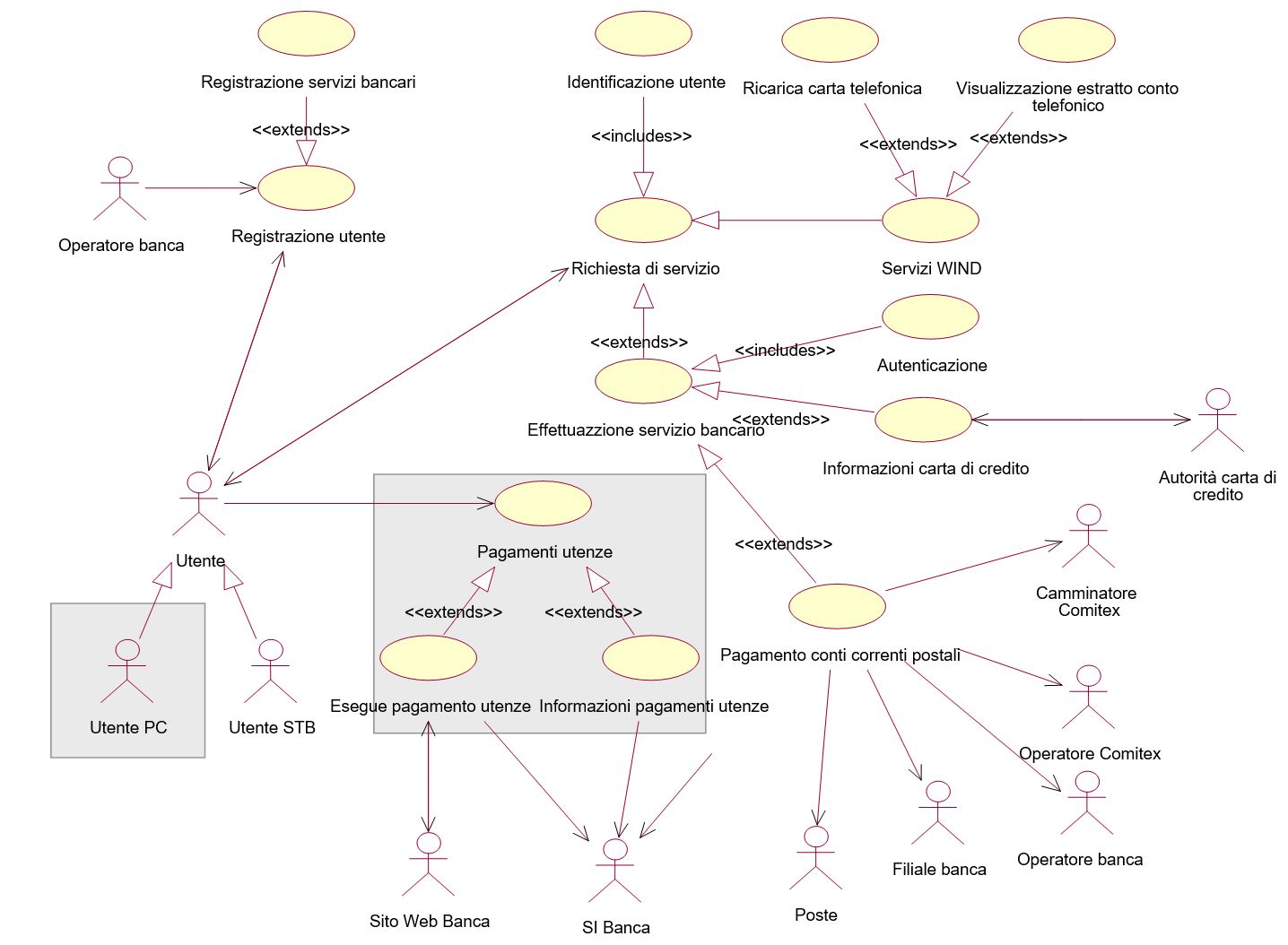
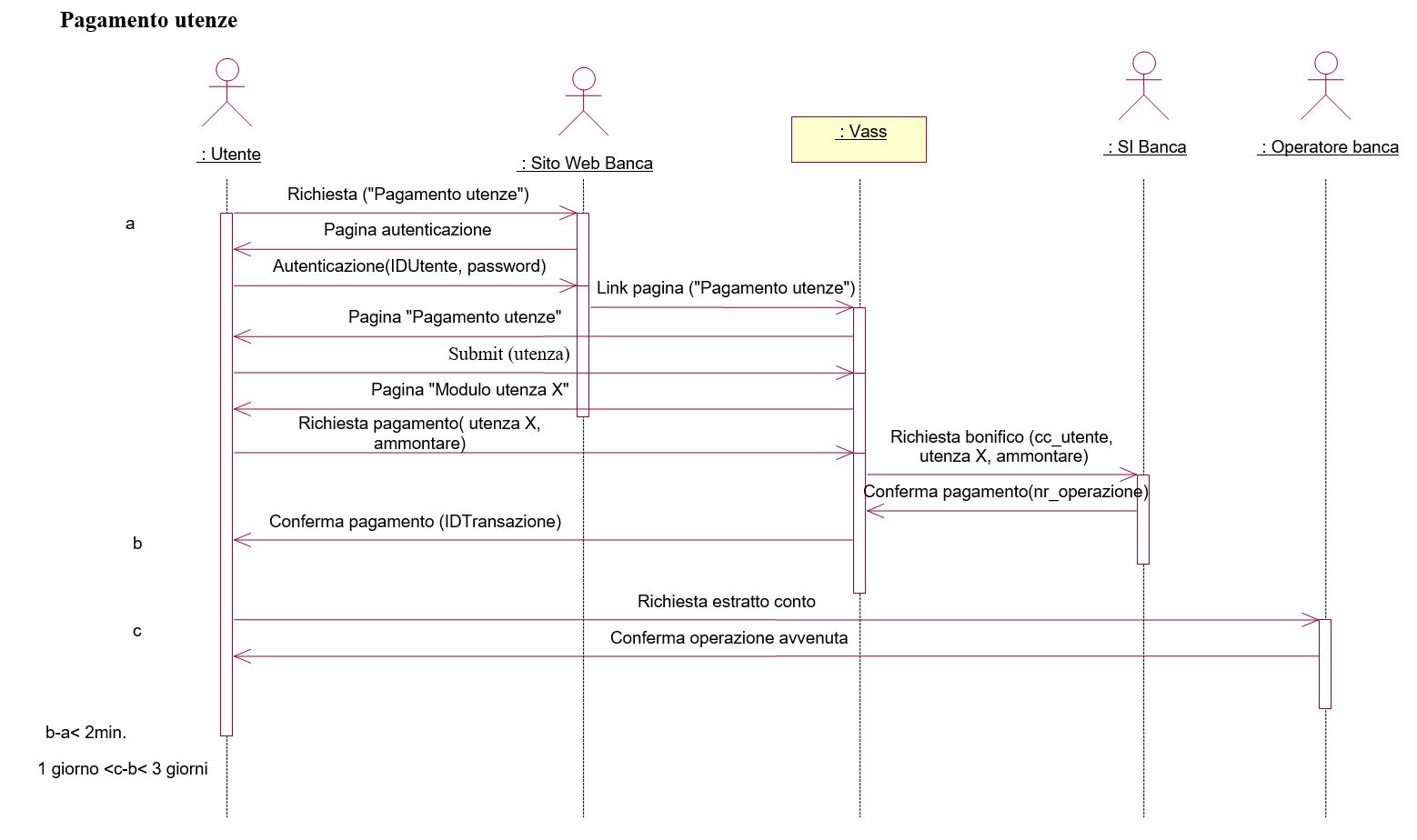
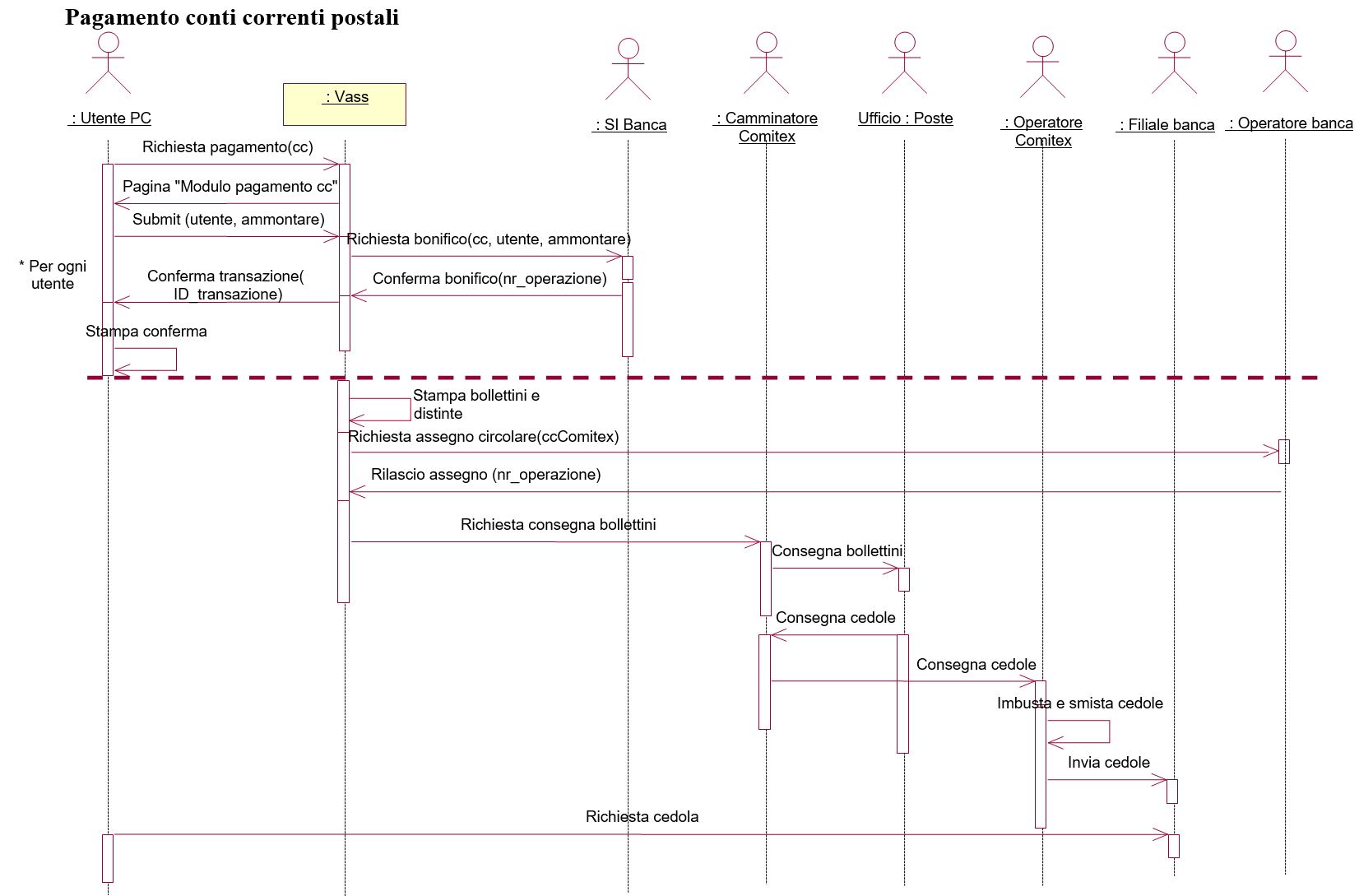
The preserved scenarios include utility payments through a bank and the VASS portal, management of payment information, and payment through postal current accounts. These scenarios clearly show that the project considered the service as a whole: not only the user interface, but also the transactional flow, confirmations, logistics, and relationships with the institutions involved.
The use-case diagrams and the concept of an interaction tree complete this perspective by offering a formal model of the dialogue between the system and the user.
Several representative diagrams from the project documentation are reproduced below.
VASS is important in my professional path because it expresses very clearly my interest in software systems that are not reduced to a single function, but organise processes, roles, interfaces, and rules of cooperation among different actors.
In this respect, the project anticipated my later interests in platforms, integration, interoperability, and the architectural modelling of software ecosystems.


