E-health workflow-based authorization using an agent-oriented virtual health care record
This article addresses one of the most difficult problems of the virtual health record: how to grant access rights in a distributed care process, carried out between different organizations, without compromising the confidentiality of patient data. The proposed solution links authorization to the care plan, the roles of the actors involved, and a multi-agent architecture capable of mediating, mapping roles, and negotiating permission escalation when the clinical situation requires it.
Bibliographic data
Authors:
Luca Dan Șerbănați, Andrei Vasilățeanu
Title:
E-health workflow-based authorization using an agent-oriented virtual health care record
Published in:
Proceedings of ICAART 2011
Year: 2011
Pages: 439–442
Figures from the article
Thumbnails (click to enlarge)


Fig. 1. The VHCR architecture and its community of agents.
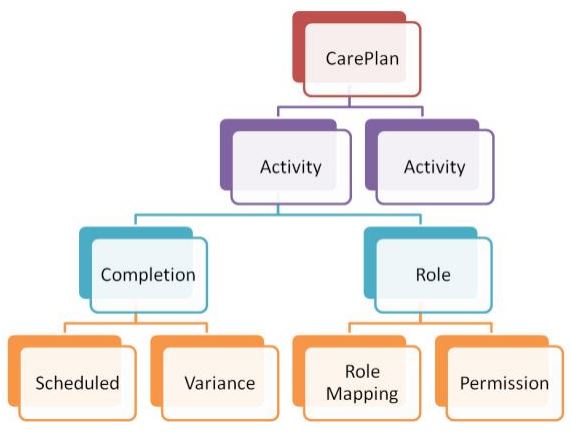
Fig. 2. Care plan used for generating and controlling permissions.
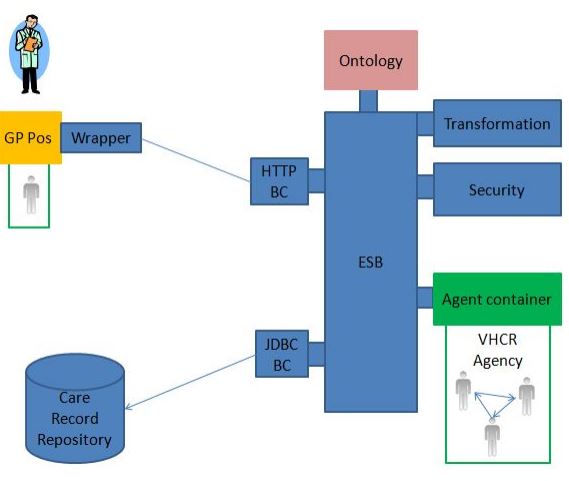
Fig. 3. VHCR integration within the LuMiR infrastructure.
Conceptual contribution
- links authorization to the care plan, not just static roles;
- uses SAML and federated authentication to cooperate with existing systems;
- proposes dynamic roles and permissions, derived from the clinical context;
- introduces specialized agents for mediation, workflow, and negotiation;
- treats security as part of organizational interoperability.
Description
The article starts from a very realistic observation: the advantages of an e-health solution depend on its adoption, and two of the major obstacles are interoperability and security. In this context, the authors choose to focus on a precise but crucial problem: authorizing actors who access and modify the medical record in a complex care process, carried out between different organizations.
At the core of the solution is the Virtual HealthCare Record, viewed not as a simple document repository, but as an e-health service provider, capable of maintaining the coherence of the longitudinal record and exchanging messages with other applications. VHCR is supported by an ontology derived from HL7 RIM v3 and a community of agents called the VHCR Agency, oriented towards interaction with caregivers, medical devices, health status monitoring, and workflow supervision.
The core of the article is the idea of e-consent and authorization based on the care process. Instead of a completely static approach, the authors start from the care plan, meaning the description of the clinical activities planned for the patient. In this way, permissions are no longer just fixed properties of a generic role, but become dependent on the care episode, the concrete activity, and the actors involved.
The article reviews the main access control models and compares these models with the HL7 approach, which uses RBAC and a normative catalog of permissions. The authors choose federated authentication precisely to be able to cooperate with existing EHR systems, reusing their local authentication services through Security Assertion Markup Language assertions. This choice is practical and realistic: it does not attempt to replace existing infrastructures, but to make them interoperable.
The specific contribution of the article appears when roles are linked to the care plan. The care plan is modeled as a business process, divided into activities and tasks. The workflow agent tracks its execution, and the necessary roles and implicit permissions are derived from this plan. In a simple scenario, for example, a NURSE role receives the right to confirm the administration of a medication in a specific care episode. In a complex scenario, roles must be mapped to real organizational structures from an external institution.
Here the idea of organizational interoperability comes into play. Different medical institutions are organized differently, use local ontologies, and do not have standardized roles. To solve this problem, the article introduces the Mediator Agent, the agent that queries institution-specific agents, maps ontologies, and translates local roles into roles compatible with the VHCR model. Thus, security becomes not only a technical problem but also a translation problem between organizations.
A second very interesting element is the Clinical Workflow Engine Agent, which leads and supervises the execution of the care plan. It publishes the activities to be executed, tracks confirmations, and manages the progress of the plan. In the examples given in the article, the agent can supervise the administration of a home therapy or the execution of a specialized consultation in a complex organization.
However, the most original agent is the Permission Negotiator Agent. It intervenes when implicit permissions are not sufficient. For instance, a specialist has implicit access only to certain care episodes, but during a consultation, they may need additional data. In this case, a negotiation begins between the provider's agent and the VHCR agent. If a simple request is not enough, the dialogue can move into a persuasion phase, invoking arguments such as the clinical impact of refusal or the requester's level of trust. It is one of the first works in which the transition from rigid access control to a more flexible, contextual, and argumentative logic can clearly be seen.
The last part of the article is important for the project's history: it shows how VHCR was to be integrated into the Italian LuMiR infrastructure. The authors propose connecting the agent container to the existing Enterprise Service Bus, reusing security, authentication, and notification services, and installing wrappers and lightweight agent containers at healthcare providers. In this way, the article perfectly links two levels: the theory of agent-based authorization and its integration into a real regional project.
Viewed in retrospect, the article is important because it shows that security cannot be treated separately from the organization of the medical act. Instead of reducing the problem to simple permission lists, it relates it to the care plan, dynamic roles, the structure of organizations, and software agents capable of negotiating and mediating. For this reason, it occupies a significant place in my research branch on VHR and in the transition towards richer agent-oriented systems.
The article's place in the research path
In relation to the other works on VHCR, this article shifts the focus from information integration to the problem of access control and cooperation between organizations. It thus complements the article on the multi-agent architecture of the VHCR, adding an indispensable dimension: how real actors can legitimately and contextually receive the necessary permissions to act.
At the same time, the article clearly announces two subsequent directions: on the one hand, the interest in virtual organizations and organizational interoperability; on the other hand, the transition towards the digital healthcare ecosystem, where agents do not just execute roles, but live in an open environment, governed by rules and relationships between organizations.
Links
- Virtual Healthcare Record
- Multi-agent architecture for the Virtual Health Record (2010)
- Integrating clinical information from a personal health record into the virtual healthcare record (2011)
- Digital Healthcare Ecosystem
- Supporting Adaptability in Agent-Based Digital Healthcare Ecosystem (2011)
- Back to the Digital Health section