


A Virtual Health Record-based EHR System (2015)
Developed in the context of the Smart Health 2.0 project, this paper proposes a second-generation Electronic Health Record in which the Virtual Health Record (VHR) is not merely a document repository, but a component that turns clinical data into contextualized information and services for care, patient participation, and secondary uses. The contribution lies both in this conception and in the explicit method for deriving software services from healthcare scenarios.
Navigation
Bibliographic Data
Title: A Virtual Health Record-based EHR System
Authors: Carmelo Militello, Salvatore La Iacona, Luca Dan Serbanati, Fabrizio L. Ricci, Maria Carla Gilardi
Year: 2015
Event: 5th IEEE International Conference on E-Health and Bioengineering (EHB 2015)
Location: Iași, Romania
Theme: VHR, EHR 2.0, functions and services, innovative care scenarios, software architecture
The article places the VHR at the center of a second-generation EHR, designed not only for document exchange, but also for decision support, care continuity, governance, research, and the active participation of the patient.
Bibliographic note: presented at EHB in November 2015; the Milano-Bicocca repository records proceedings publication in 2016. DOI: 10.1109/EHB.2015.7391425.
Article Figures
Thumbnails (click to enlarge)


Fig. 1 – use case diagram for business processes in NHS.
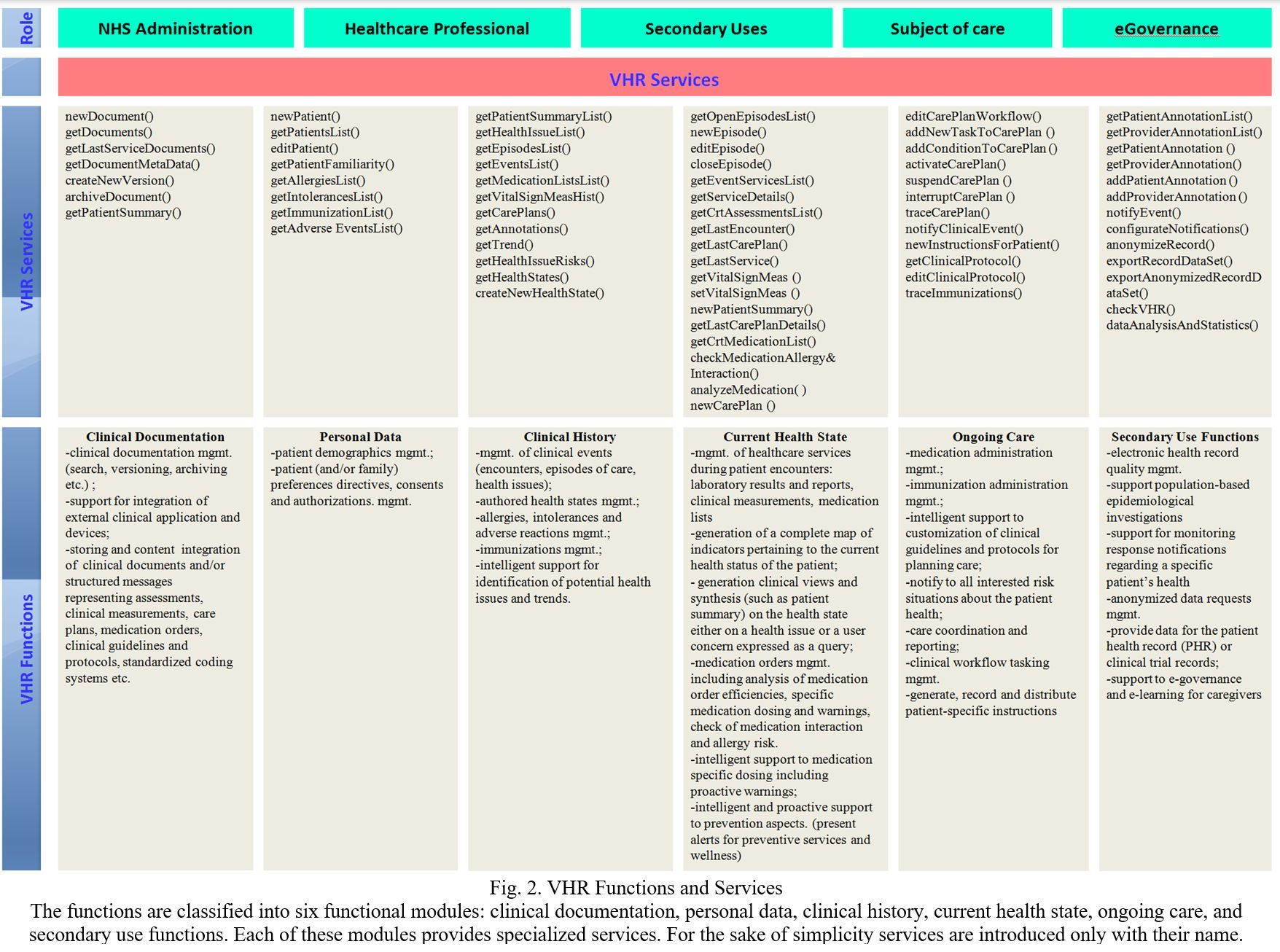
Fig. 2 – VHR functions and services, organized into six functional modules.
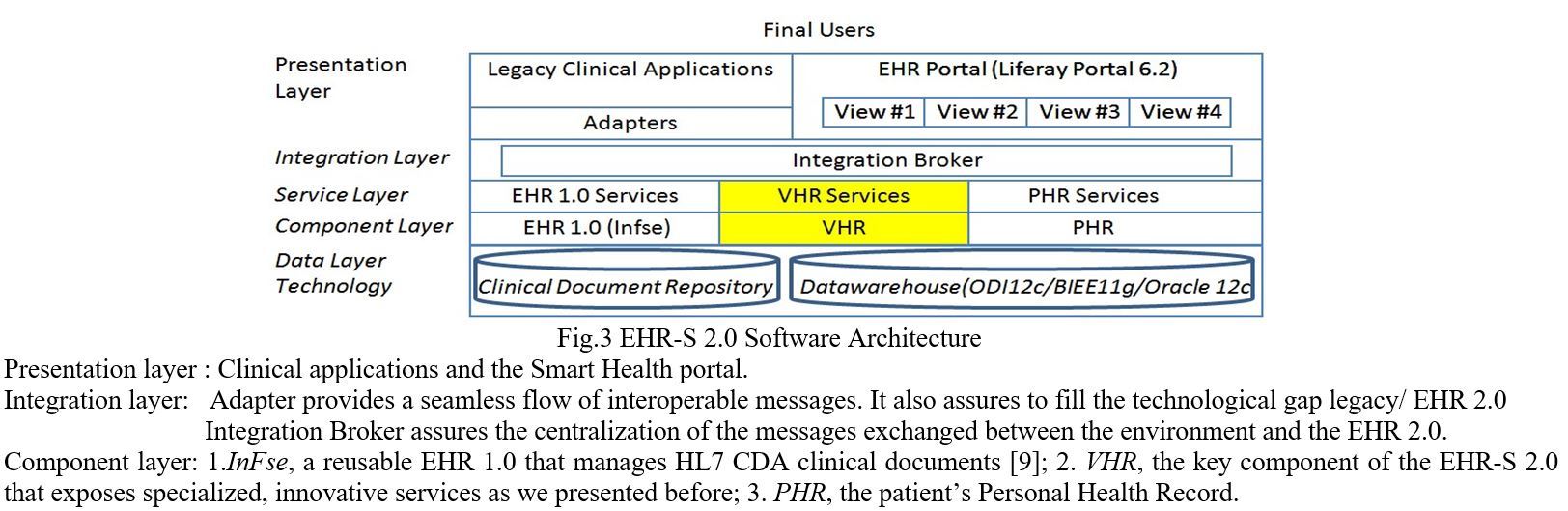
Fig. 3 – the layered software architecture of the EHR-S 2.0 prototype.
The article contains three important figures: the first for the method, the second for the functional core of the VHR, and the third presents the architecture of the new platform.


Tab. 1 – "Medical encounter" without EHR 2.0 ("as is" version)
Tab. 2 – "Medical encounter" with EHR 2.0 (visionary version)
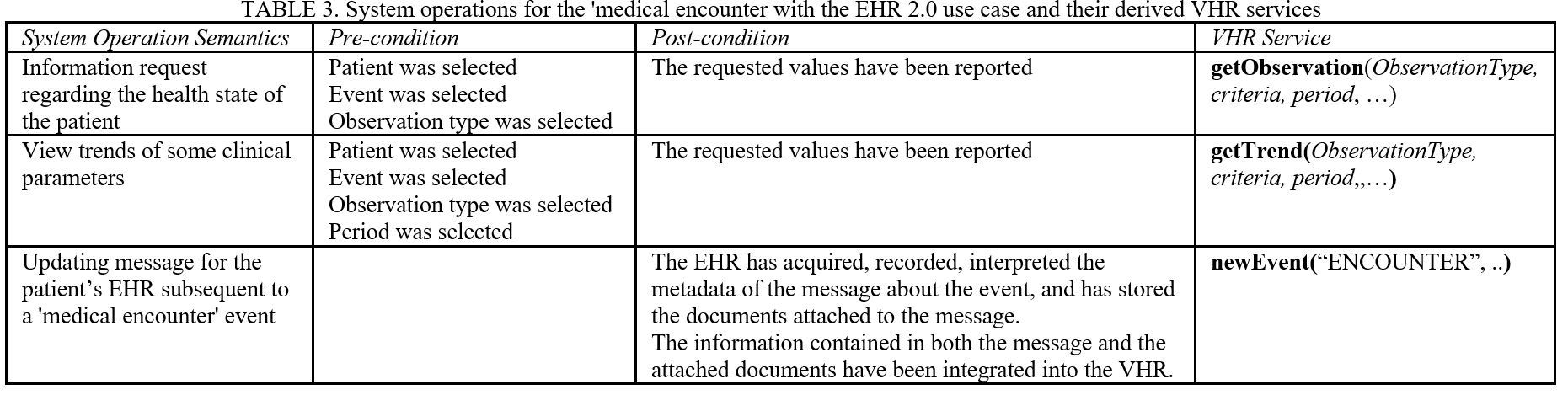
Tab. 3 – System operations for the "Medical encounter with the EHR 2.0 use case" and their derived VHR services.
The first two tables contrast the medical encounter without and with EHR 2.0; the third connects system operations to the VHR services derived from them.



Conceptual Contribution and Place of the Work
In the evolution of my research, the 2015 paper marks a stage of synthesis and operationalization. Starting from LuMiR and longitudinal record models, and continuing through digital healthcare ecosystems and real–virtual interactions, the research arrives at a functional specification for a VHR at the heart of a regional EHR 2.0. The novelty is not the initial idea of a VHR, developed earlier, but the explanation of how that idea can become a coherent set of services.
An important methodological contribution is the sequence care process → existing scenario → visionary scenario → system operations → functional requirements → VHR services. The medical-encounter tables demonstrate the transition from activities in the real world to system functionality. The paper also distinguishes the clinical document as a legally meaningful artefact from the significant information extracted from it, which can be aggregated and interpreted in new contexts.
Historically, the paper precedes the developments concerning Health Digital State and Smart EHR. It presents a functional model and a prototype architecture, not the outcomes of a comparative clinical evaluation; that distinction matters when assessing its contribution.
Comprehensive Description
1. From EHR 1.0 to EHR 2.0
The article starts from the distinction between EHR 1.0 and EHR 2.0. EHR 1.0 is described as a point of aggregation and sharing of medical documents associated with the patient, justified by the need for collaboration between professionals through a common repository. EHR 2.0 is however conceived as an evolution of this model: a system that is not limited to document management, but aims to innovate care, research, education, and governance processes.
2. Smart Health 2.0 and the Sicilian Context
The text links this vision to the Smart Health 2.0 project, which aimed to implement an EHR 2.0 in the Sicily Region. In this context, VHR is presented not as an auxiliary module, but as a central piece of a regional platform capable of supporting diverse actors from the healthcare system.
3. Why Documents are not Enough
A very important point is the implicit critique of an EHR based exclusively on documents. For an evidence-based and patient-centric medicine, a simple document management tool is insufficient. Applications are needed that are capable of working with smaller, but significant, fragments of document content and of aggregating this atomic data into richer structures, either predefined or built ad-hoc.
4. Method: From Processes and Scenarios to Services
One of the most interesting contributions of the article is the analysis method. The authors start from major processes in the national health system and group them into three large functional areas: functions for medical staff, functions for the patient, and functions for secondary uses. For each process, representative scenarios are chosen, the "as-is" cases are described, then "visionary" variants are built, in which EHR 2.0 actively intervenes. From their analysis, system operations, functional requirements, and, finally, VHR services are derived.
5. The "Medical Encounter" Example
The article exemplifies the method through the scenario of a medical encounter. In the "as-is" version, the doctor consults the patient and updates their own EMR. In the version supported by EHR 2.0, the doctor can request a view of the patient's health status, can request trend analyses for certain clinical parameters, and their EMR sends messages and documents to the system that are then integrated into the VHR. In this way, the real and the digital worlds cooperate in real time.
6. The VHR Concept
In the central section, VHR is defined as an entity that contains "virtually all the knowledge" available about the health of each individual in the jurisdictional area. It must record relevant clinical events, analyze and extract significant atomic data, manage them coherently and intelligently, and organize them into a rich semantic structure, in which each value is placed in its complete context: who, where, what, when, how, from what document, and why.
7. Data provenance and semantic context
Each clinical value must remain interpretable in context: who generated it, where, what was measured and in which units, when, how and with which instrument, from which document it originated, and why it was obtained, for example in connection with a diagnosis. The paper treats these seven questions as facets of a semantically connected data structure. Extracting an observation from a document should not erase its provenance; provenance is essential to clinical interpretation and responsible reuse.
8. VHR Objectives and Services
The article defines two main objectives of the VHR: information exchange with integrated clinical systems and maintaining internal information coherence, so that the system can offer at any time an instantaneous and consistent snapshot of the current health state, clinical history, and ongoing care processes. From this flow services of collection, integration, notification, data composition, process monitoring, and adapted information presentation.
9. Internal Structure of VHR
Knowledge inside the VHR is organized around three major components: the medical history, consisting of care episodes composed of contacts; the current health state, as an aggregate of the most recent observations and evaluations; and the ongoing care processes, represented by care plans and clinical pathways. This structure shows direct continuity with previous formulations about contacts, care episodes, and longitudinal perspectives.
10. VHR Functions
Figure 2 summarizes very well the proposed functional architecture. VHR is divided into six modules: clinical documentation, personal data, clinical history, current health state, ongoing care, and secondary use functions. Each module offers specialized services, but all share a common core of basic services. It is precisely this organization that makes the project's ambition visible: VHR is not just a repository, but a platform of differentiated services according to the stakeholder's roles.
11. Clinical Trials and Secondary Uses
Although the article cannot extensively develop all secondary uses, it mentions them explicitly: e-governance, e-learning, medical research, and clinical trials. This is an important detail, because it shows that VHR was thought of since here not only as an infrastructure for care, but also as a resource for research and for other functions of the healthcare system.
12. The EHR-S 2.0 Prototype
In the last section, the article descends towards implementation. The prototype is organized into three layers: presentation layer, integration layer, and component layer. In the component layer appear three main components: InFSE, as a reusable EHR 1.0-type infrastructure for HL7 CDA documents; VHR, the key component with innovative services; and PHR, linked to the patient empowerment paradigm. This model clearly shows that VHR is conceived here as an active core on top of an already existing documentary infrastructure.
13. Place of the Article in Subsequent Evolution
Viewed retrospectively, the 2015 article is particularly valuable because it brings together in a short and coherent form several developmental threads: VHR as an intelligent entity, patient-centered medicine, secondary uses of data, patient empowerment, and the architecture of a second-generation EHR. It prepares, in a certain sense, the ground for even more mature concepts such as Health Digital State and Smart EHR.
Methodological insights and critical assessment
From a scenario to a service contract
Table 3 is especially significant from a software engineering perspective. A doctor's request for patient observations becomes an operation with preconditions and postconditions, then a getObservation service. Comparing values over time leads to getTrend, while a new clinical encounter leads to newEvent. Process analysis thus produces more than narrative descriptions: it offers a route from real-world events to identifiable software interfaces. The paper illustrates that route with selected operations; it does not establish that the complete service catalogue had been implemented.
What “intelligent” means in this paper
The term intelligent should not be equated either with an entirely implemented expert system or with ordinary data storage. It refers to proposed architectural capabilities: extracting information from documents, preserving coherence, aggregating data according to their meaning and context, notifying authorized actors, and tailoring answers to the problem at hand. Artificial-intelligence tools for decision support appear as a possibility in visionary scenarios; the paper does not experimentally assess them.
Critical assessment and limitations
The paper's strength is its systematic connection between healthcare process analysis, data modelling, and service architecture. Equally important are its limitations: it reports neither clinical effectiveness outcomes nor regional-scale performance measurements or systematic validation of semantic extraction quality. In actual deployment, legacy-system integration, patient identity and consent, data provenance and quality, security, and access governance would constrain implementation. The demonstrable contribution is therefore one of modelling, functional analysis, and architectural design; implementation is described as ongoing work.
Standards as a reference, not an exhaustive specification
The authors use the HL7 EHR-S Functional Model to organize requirements concerning care provision, clinical support, public health, and administration. In the Sicilian setting, the project found some of the standard requirements necessary while identifying additional needs not fully addressed by the existing model. Standardization therefore provides an interoperability reference; it cannot replace analysis of regional care processes. This helps explain why VHR services are derived from scenarios instead of being copied solely from a generic catalogue of functions.
Links
- Virtual Healthcare Record – the central concept page.
- R2V2R – the starting point of integration between real and virtual.
- LuMiR – the regional implementation in which VHR received architectural expression.
- Digital Healthcare Ecosystem – the broader conceptual framework.
- Health digital state and Smart EHR systems (2020) – subsequent development towards HDS and Smart EHR.
Back to concept: Virtual Healthcare Record